
Kari's Tips and Tricks
Kari’s Tip #132: Stop Losing the Emails that Matter
One click. Two seconds. Your most important emails — always at the top.
We've all been there.
You're in the middle of something important and you remember: "I need to follow up on that email." So you go to your inbox. You scroll. You search. You get lost in your inbox. You lose two minutes — (or more 😏) — AND your train of thought.
What if the emails that need your attention, the ones you know you're gonna need to find in the near future were simply — always at the top? Just sayin? 🤷♀️
🧠 The Mental Load of "Don't Forget That Email"
Last week we talked about using Rules to move low-priority emails out of your way. This is the flip side: making sure your high-priority emails are impossible to miss.
Most of us manage this with mental sticky notes.
"I need to come back to that."
"Don't forget to reply."
"That one is important."
That is not a system. That is a slow leak on your focus (and brain power).
Every email you're mentally "tracking" is a tiny background process runni...
Kari’s Tips #131: Your Inbox on Autopilot — Is Your Filing System Slowing You Down?

Your Inbox on Autopilot
Let's take a quick look at why your current filing system may be silently draining your time.
There’s a quiet thief in your inbox—and it’s not spam.
It’s the constant stream of non‑urgent emails that interrupt your focus, crowd your view, and pull you away from deeper work.
Newsletters. Promotions. Updates you want… but not right now.
If every message sits alongside the emails that actually require your attention, your brain treats them all as equally important. And that is where the overwhelm begins.
📏Why Outlook Rules Help You Breathe Again
Rules let you automatically move low‑priority emails out of your main inbox so you see only what matters when you sit down to work. Think of Rules as a digital gatekeeper: they quietly redirect information you do want, just not front‑and‑center while you’re working.
PART 1: How to set up a rule (quick):
- Right‑click a newsletter or non‑urgent email
- Choose Rules → Create Rule
- Choose Move to Folder
- Create or s...
Kari’s Tip #130: The Secret to Stress‑Free Follow‑Up in Outlook
A simple Outlook trick that keeps your inbox clean and your mind clear!
Tiny Interruptions add up to HOURS of Time Wasted
Lately I’ve been paying close attention to how much of our day gets chipped away by tiny interruptions — not dramatic ones, just the constant tug of “Don’t forget this…,” “Check that…,” “Follow up on that…”
It’s subtle, but it adds up. And if you’re feeling that constant mental buzz, you're not imagining it — we are living in a time where everything is asking for a slice of our attention. Remember the stat I sent in my last email? The average person spends 28% of their work week (that's a WHOPPING 11 Hours)!!
I’m in a season where I want to live with more intention, less distractions.
Not slowing down in the sense of quitting or doing less — but slowing my mind enough to stay focused on what actually matters and also to produce better quality work. I’m trying to be thoughtful about what gets access to my attention, and what doesn’t.
We used to hunt for informa...
Kari’s Tip #129: The Intentional Inbox - Reclaim your Time
A Moment of Reflection
I've spent some time thinking hard about the content I share and why I share it over the last few weeks. I thought about what kind of a resource I want to be to you—what kind of energy I want to resonate and both how I want to help you but more importantly… WHY.
As I get older (more experienced and wiser?) I think about my legacy—not just with my family—but with the people I've worked with, shared content with, helped, and taught. I want to bring you REAL value—not just a tip you can get from AI or Google. I want you to know me, and know WHY I want to help you.
Choosing Deliberation Over Noise
In this chapter of my life, I want to slow down, not to do less—but to be more deliberate. I don't want to be part of the "noise." I have too much noise in my life—do you too?
There is so much information right now I think we need to all be careful about what we let in. Information used to be scarce, a limited commodity most of us tried to get as much of as we could...
Kari’s Tip #128: Cut the Clutter: How to Know If You Need a Team, a Channel… or Just a Folder?
Collaborative Cloud Strategy & Training for Microsoft 365
One of the things I’m doing a ton of lately is helping organizations clean up and rethink how they’re using Microsoft Teams, SharePoint, and OneDrive. Most companies rolled these tools out quickly—or piecemeal—and now things feel scattered, inconsistent, and a little overwhelming for users.
That’s where cloud strategy comes in.
I help bridge the gap between IT and everyday users by creating a clear, simple structure for where files should live, how Teams should be organized, and how permissions should work behind the scenes. When people understand why something should be a Team versus a channel versus a folder, things suddenly get easier… and a lot less messy.
I’m also putting the finishing touches on a course that walks through these same principles step-by-step, so everyone can feel confident navigating Microsoft 365.
Here are a few of the best practices I always teach:
⭐ Have fewer Teams.
More Teams ≠ more organized.
Wh...
Kari’s Tip #127: What's New In Outlook (that you ACTUALLY care about)?
Remember the old days? When a new version of Outlook came out, it was an event. Companies held off rolling it out, I packed up my laptop and headed into offices, and we made sure everyone understood the new interface and features before the switch happened. Fun note: some of you know me from THOSE DAYS!
Well… those days are long gone - Sorry :(
Now that most software is subscription-based (hello, SaaS), updates slip in quietly without any fanfare. And honestly, half the time we don’t need to know every little thing. But the other half? That’s where Microsoft sneaks in features that can genuinely help you work faster, stay organized, and save minutes (or hours) over a week — and most people never even notice them.
If you’ve opted into those “What’s New in Outlook” emails, you probably do what everyone else does: glance at the subject line, think “I’ll read that later,” and… yeah. Later never quite arrives.
And when you do read them? Half the updates sound like:
“Great… but why should...
Kari’s Tip #126: Where in the heck are your Teams Meeting Recordings?
You've been there… you're trying to find that Teams meeting recording and it’s just gone. UGH! You checked OneDrive, your calendar, the meeting chat, even random places in Teams—and still nothing. So frustrating! And honestly, half the battle is just knowing where they should show up. Even worse? You finally track it down… and you don’t have permission to watch it. HELP!
Here’s a quick, easy guide to finally make sense of it all:
Where Teams Meeting Recordings Go
(Quick + Easy Guide)
Channel Meetings (inside a Team):
-
The recording is automatically saved in SharePoint, in the Files tab of that channel.
-
File path: Team > Channel > Files > Recordings folder
-
Everyone who’s a member of that Team/Channel automatically has access.
Non-Channel Meetings (private, ad-hoc, or calendar meetings):
-
The recording is saved to OneDrive—specifically in the OneDrive of the person who clicked Record.
-
File path: Recorder’s OneDrive > Recordings folder
-
A sharing l
...
Kari's Tips and Tricks #125: Copilot Tips and how to use it with your Microsoft Apps

Quick Guide for Getting Things Done with AI in Microsoft 365
Ideas of How to Use Copilot (or any other AI tool)
✅ Write and edit content faster
✅ Summarize chats, emails, and documents
✅ Analyze and visualize data
✅ Automate routine tasks
✅ Make decisions with context
Tips for the Best Results
- Be specific: Instead of “Summarize,” say “Summarize the last 5 messages.”
- Use context: Mention files, people, or dates to guide Copilot.
- Rephrase if needed: If a prompt doesn’t work, try a different wording.
- Copilot to do—summarize, draft, explain, schedule?
Use natural language. Be clear & specific.
- “Summarize this document in 3 key points.”
- “Draft an email to the team about the new file structure.”
- “Rewrite this to sound more confident.”
- “What are the key takeaways from this meeting?”
Copilot Shortcuts
|
Shortcut |
What It Does |
|
/summarize |
Summarizes a chat or meeting |
|
/catchup |
Gives a quick update on unread messages |
| ... |
Kari’s Tip #124: Making Sharing from OneDrive Simple (and Secure!)
✨ Why OneDrive Sharing is So Helpful:
-
You can share ad hoc — perfect for a one-off file you need to send without creating a whole new Team or SharePoint site.
-
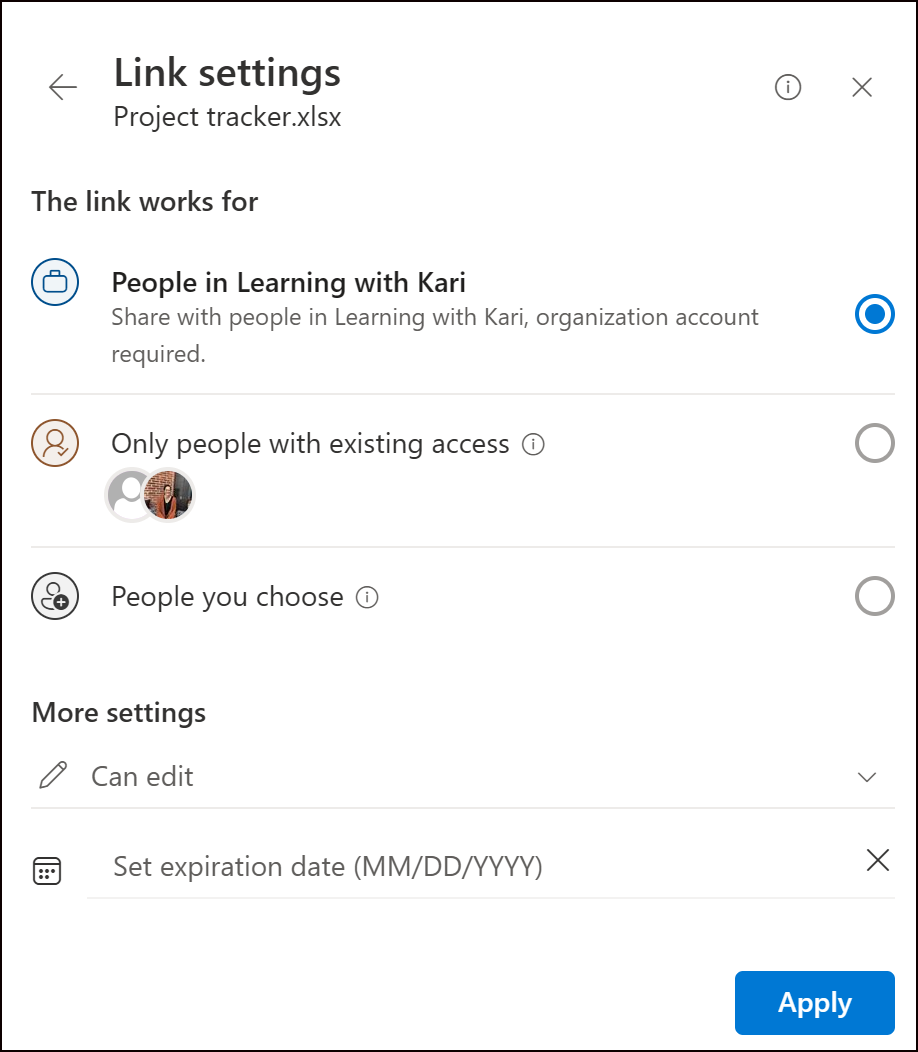
You can set an expiration date for the link, so access ends automatically after a certain day. (This is a great security feature.)
-
You can change or stop sharing later if you no longer want someone to have access.
-
And if you have the OneDrive mobile app, it’s even easier — you can share files right from your phone while you’re out and about.
📌 How you can quickly share a file or folder
- Open OneDrive (web, desktop or app).
- Right-click the file or folder you want to share and select Share.
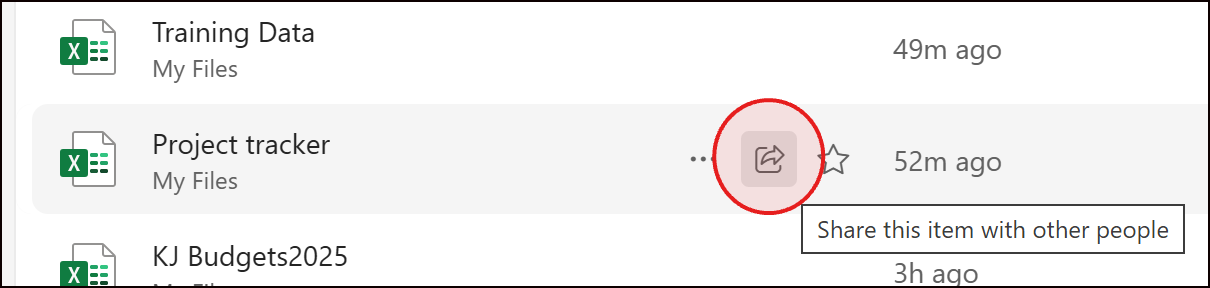
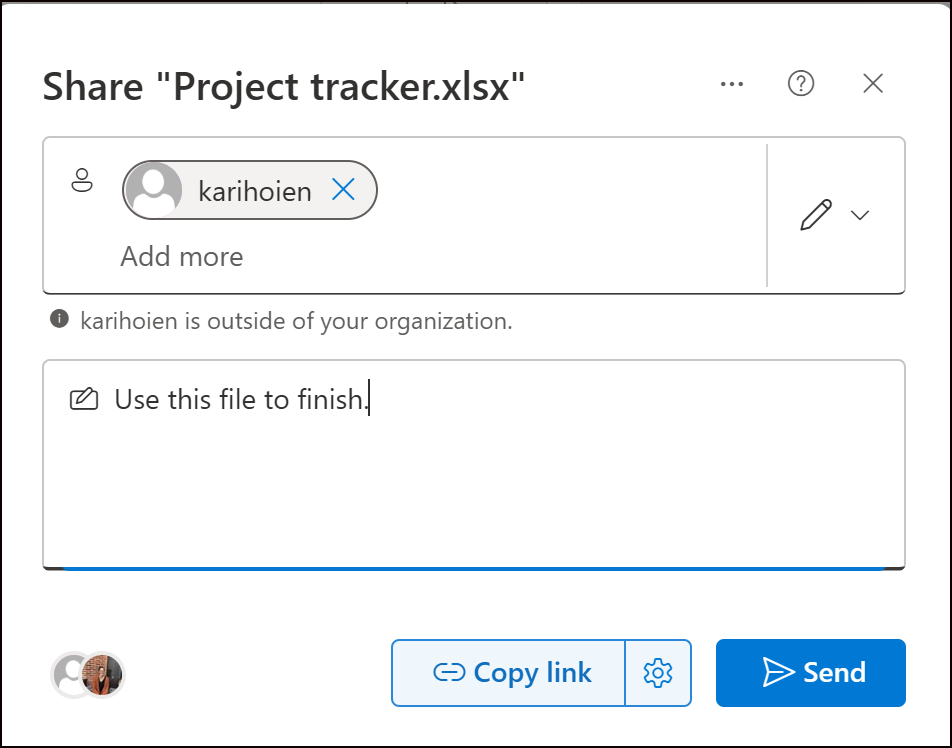
- Add a name to choose who can access it (People you choose, Anyone with the link, etc.).
- Decide if they can view (read-only) or edit the file, then send.
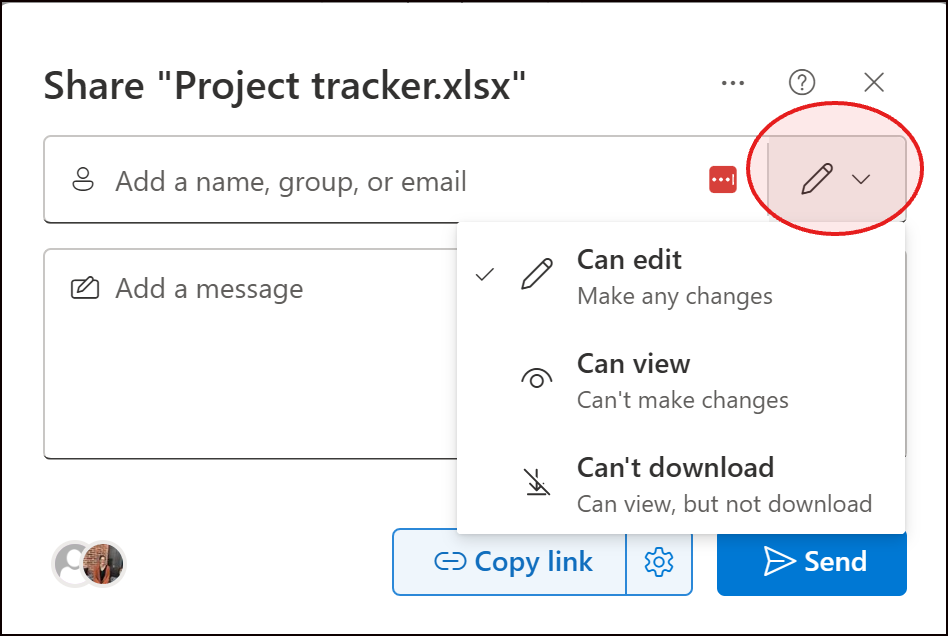
- Determine if you want the link to expire using the settings.
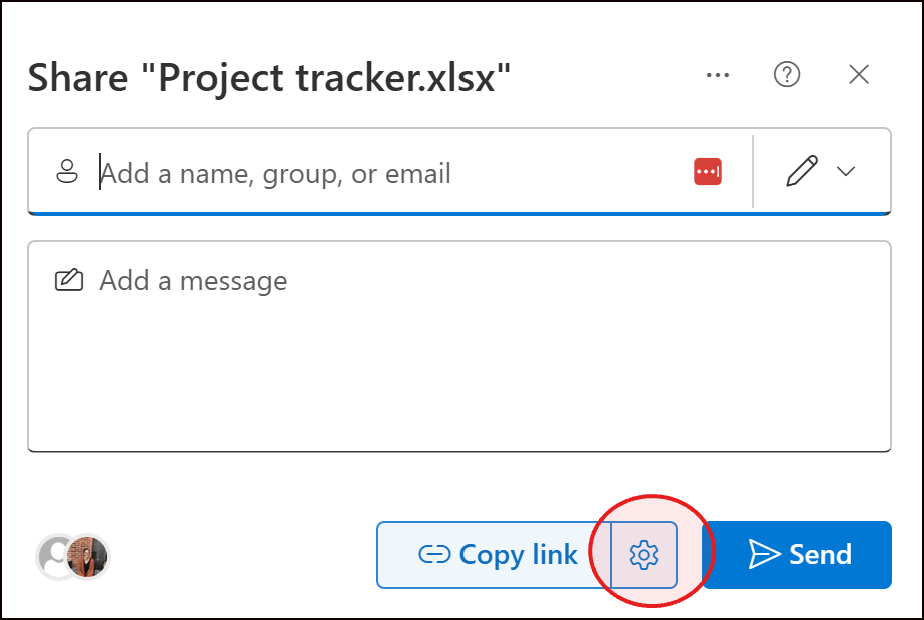
- Enter a message and click Send.
💡 Pro tip: You can add multiple shortcuts from different Tea...
Kari's Tip #123: ✨ Stop Syncing Everything: Save Time with OneDrive Shortcuts ⏱️
Do you ever feel like it takes way too many clicks to get to the files you need in Teams or SharePoint?
Here’s a simple trick that will save you time (and frustration): Add a shortcut to your OneDrive instead of syncing entire folders to your computer.
Why use a shortcut instead of sync?
✨ Faster access – your files show up right in OneDrive alongside everything else.
✨ Less clutter – no need to sync whole libraries you’ll never use.
✨ Always updated – you’re always working with the latest version in Teams/SharePoint.
How to Add a Shortcut to OneDrive
-
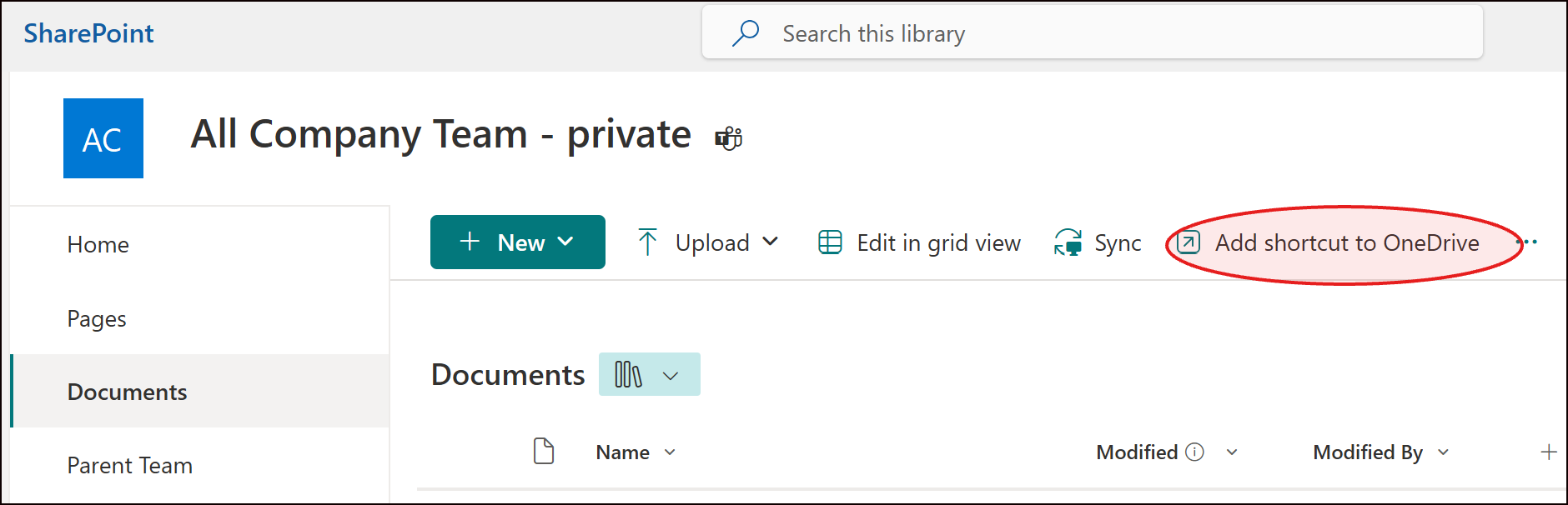
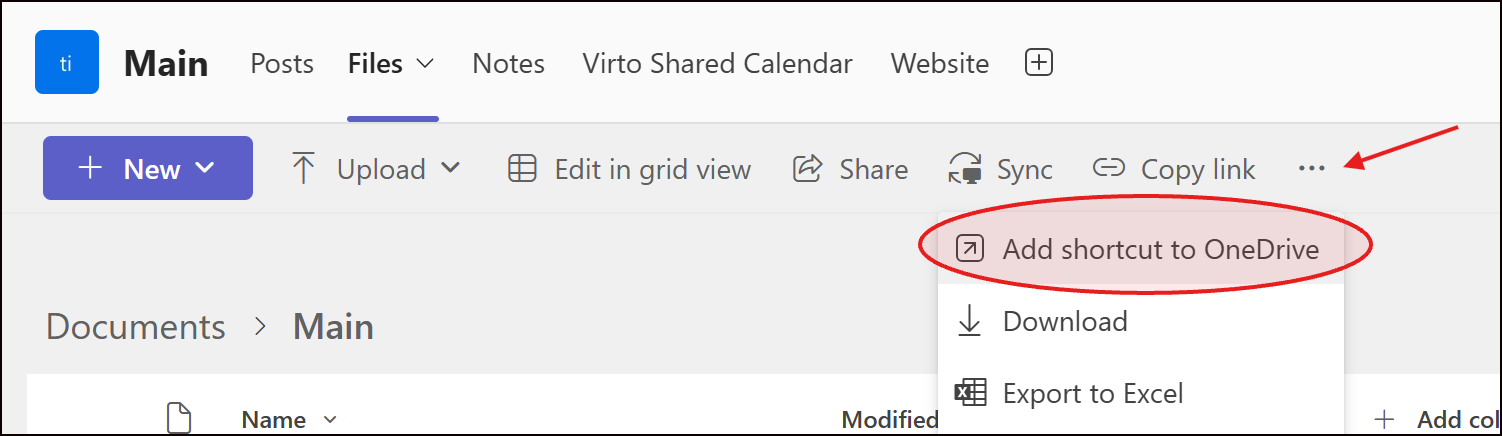
Go to the SharePoint Document Library (or the team in Microsoft Teams).
-
Navigate to the folder you want (in Teams, click the Files tab).
-
Click Add shortcut to OneDrive in the top menu.
-
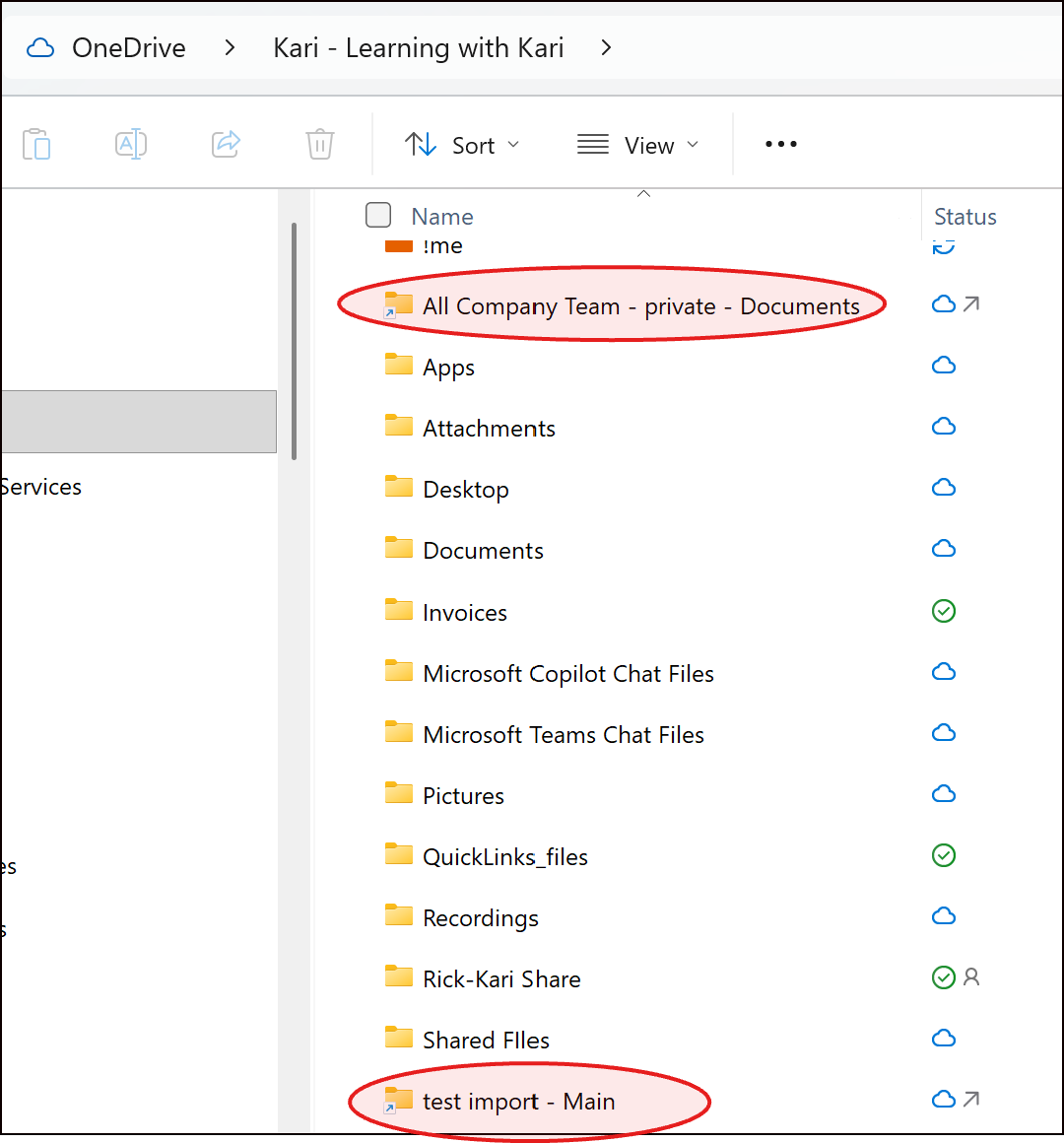
Open your OneDrive — your shortcut is right there, no hunting required!
💡 Pro tip: You can add multiple shortcuts from different Teams and SharePoint Libraries. They’ll all live neatly in your OneDrive, giving you a single ...
